Your skin can look dull, feel tight, or seem less comfortable even when you are using moisturizer every day.
Why?
Because hydration and moisture are not exactly the same thing.
Understanding the difference can make skincare feel much simpler — and help you choose products based on what your skin actually needs rather than adding more and more steps.
At CAELATA, we believe thoughtful care begins with understanding your skin.
Hydration and moisture: what is the difference?
Hydration refers to the water content within the skin.
Moisture, on the other hand, is more closely related to the skin’s ability to retain that water and maintain a comfortable, supported barrier.
That means skin can be:
- dehydrated but oily;
- dry but not noticeably dehydrated;
- both dry and dehydrated; or
- well balanced.
This is why two people with completely different skin types may both benefit from hydration — but may need different products to maintain it.
What is dehydrated skin?
Dehydration is a condition, not a skin type.
It can affect dry, oily, combination, or normal skin.
Dehydrated skin may feel:
- tight;
- uncomfortable;
- dull;
- less supple;
- more sensitive than usual; or
- temporarily more noticeable in fine lines.
Environmental factors, weather, over-cleansing, excessive exfoliation, low humidity, and certain skincare habits may all contribute.
The important thing is that dehydration can change over time.
Your skin may feel perfectly comfortable one month and need more support the next.
What is dry skin?
Dry skin is generally associated with lower levels of natural oils.
It may feel:
- rough;
- flaky;
- tight;
- easily irritated; or
- uncomfortable after cleansing.
Dry skin often benefits from products that do more than simply add water.
It may also need ingredients that soften the skin and help reduce moisture loss.
Three ingredient groups worth knowing
Skincare ingredients that support hydration and moisture are often discussed in three broad groups:
Humectants
Humectants help attract and hold water.
Common examples include:
- glycerin;
- hyaluronic acid;
- panthenol;
- urea; and
- certain forms of sugars and amino acids.
Humectants are commonly found in serums, lotions, and moisturizers.
They can be especially useful when skin feels dehydrated.
Emollients
Emollients help smooth and soften the skin.
They can improve the feel of rough or dry skin by filling some of the spaces between surface skin cells.
Examples may include:
- squalane;
- ceramides;
- fatty acids;
- plant-derived oils; and
- certain esters.
Emollients can make the skin feel more comfortable and supple.
Occlusives
Occlusive ingredients help reduce water loss by forming a protective layer over the skin.
Examples may include:
- petrolatum;
- mineral oil;
- dimethicone; and
- certain waxes.
They can be particularly helpful for very dry areas or when the skin barrier feels compromised.
Do you need all three?
Not necessarily.
Many moisturizers already combine humectants, emollients, and occlusive ingredients in one formula.
The right balance depends on your skin.
Someone with oily but dehydrated skin may prefer a lightweight lotion with humectants.
Someone with dry, mature skin may feel better with a richer cream containing humectants, emollients, and more occlusive ingredients.
There is no universal texture that works for everyone.
Does mature skin need more hydration?
Skin can become drier or less efficient at retaining moisture over time.
For some women, this means products that once felt too heavy may gradually become more comfortable.
You may also notice that your skin benefits from:
- gentler cleansing;
- richer moisturizers;
- fewer aggressive exfoliating products;
- more consistent sun protection; or
- layering hydration under moisturizer.
But age alone does not determine your routine.
Skin type, climate, hormonal changes, medications, lifestyle, and personal preference matter too.
The goal is not to use a “mature skin” routine simply because of a number.
The goal is to respond to what your skin is showing you.
A simple hydration routine
A hydration-focused routine does not need many steps.
Morning
1. Cleanse gently, if needed
Some people may not need a full cleanse in the morning.
2. Apply a hydrating serum or essence, if you enjoy using one
This step is optional.
3. Apply moisturizer
Choose a texture that feels comfortable for your skin.
4. Finish with broad-spectrum sunscreen SPF 30 or higher
Sun protection remains one of the most important parts of daily skincare.
Evening
1. Remove makeup and sunscreen
2. Cleanse gently
3. Apply any hydrating or targeted products
4. Moisturize
For very dry areas, some people may prefer an additional occlusive layer.
Should skincare be applied to damp skin?
Some hydrating products may feel especially comfortable when applied to slightly damp skin.
This can help bring water into the routine before moisturizer is applied.
But there is no need to make the skin dripping wet.
Follow the directions provided with the product you are using.
More hydration is not always better
Adding multiple hydrating serums does not automatically create healthier skin.
Too many products can make a routine unnecessarily complicated and may increase the chance of irritation.
If your skin feels comfortable, soft, and balanced, you may already be doing enough.
Skincare should support your skin — not become another source of pressure.
Lifestyle matters too
Topical skincare can help support the skin surface, but skin appearance is influenced by many factors.
Sleep, environmental exposure, overall health, stress, nutrition, medications, and hormonal changes can all affect how the skin looks and feels.
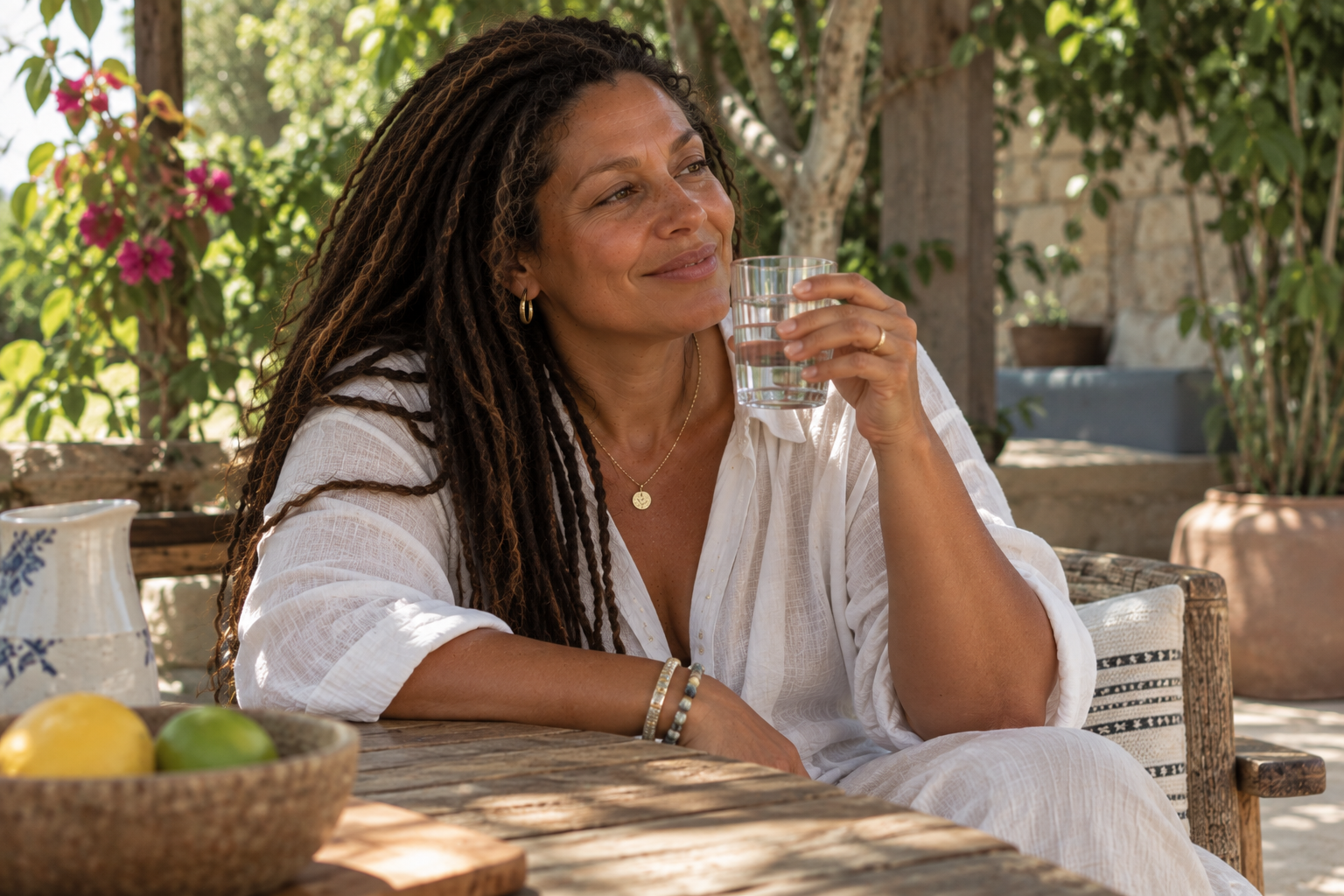
Drinking water is important for overall health, but simply drinking more water does not necessarily replace the need for appropriate topical care when the skin barrier is dry or uncomfortable.
When to simplify
If your skin suddenly feels irritated, burning, unusually tight, or sensitive, consider whether your routine has become too aggressive.
Sometimes simplifying temporarily can help.
That may mean returning to:
- a gentle cleanser;
- a simple moisturizer; and
- sunscreen during the day.
Persistent or significant skin changes should be discussed with a qualified healthcare professional.
Hydrated skin does not have to look perfect
Healthy-looking skin can still have:
- pores;
- fine lines;
- freckles;
- pigmentation;
- texture; and
- expression lines.
Hydration is not about creating glass-like perfection.
It is about helping the skin feel comfortable, supported, and cared for.

The CAELATA perspective
Good skincare does not begin with asking:
How can I make my skin look younger?
A more useful question is:
What does my skin need to feel and function at its best today?
Sometimes the answer is surprisingly simple.
More water within the skin.
Better support for the skin barrier.
A moisturizer that finally feels right.
And a routine you can actually enjoy using.
Cared for. Comfortable. Luminous. Yours.
Stay true to you. Care for you.